
banner

Dave Says Archives for 2024-07

When You Know Better, Do Better


Dear Dave,


I’ve made a lot of stupid money mistakes in the past. Even though I finally paid off six figures in debt a few years ago and am in control of my finances for the first time in my life, I’m having a hard time forgiving myself for all the dumb things I did. I have an emergency fund and other savings set aside, and I’m almost ready to buy a house. But it seems like there’s still a cloud hanging over my head from all my bad decisions. How do I stop obsessing over my past financial mistakes?


Brea


Dear Brea,


If you’ve had enough determination to pay off six figures’ worth of debt and to build savings on top of that in the last few years, you’re doing a phenomenal job! Most people would just make excuses or give up, but you educated yourself, put your head down and stomped out all that debt. I’m very proud of you, hon. What you’ve done speaks volumes about your character and self-discipline.


The late Maya Angelou once said, “Do the best you can until you know better. Then when you know better, do better.” That’s the key for you, I think. Doing dumb things doesn’t always mean you’re a dumb person. Sometimes, we just don’t have the knowledge or guidance we need to do things the right way. But once you learned a few things and saw there was a better way—a smarter way—you jumped in and made incredible things happen. You cleaned up your finances, and you changed your entire future for the better. I think that’s pretty cool. And you know what else? It makes you a pretty smart lady.


I think part of your struggle may be the fact that you’ve spent more time making the wrong decisions with money than you’ve spent making the right ones. That’s understandable. But time will help heal that struggle. It’ll distance you emotionally from the old you until you’re confident in the new you—not just in your actions, but in your heart and mind. I mean, think about it this way: If you violated trust with a friend, how would you rebuild it? First, it would take time. And second, it would take a series of trustworthy actions.


Let’s say someone had a drinking problem for a long time, but they’ve been dry for three months. After three months, their spouse still might not trust them with the checkbook. I totally get that. It’s a good start, but it’s not like they haven’t had a drink in three years. That’s where time comes into play. The more time they demonstrate a solid pattern of not going back to the bottle, the more evidence they create for why others should trust them.


I think you’ve developed a pretty good track record of being smart with your money, Brea. So cut yourself some slack. If God is willing to forgive us for the really bad things we say and do, you need to be able to extend a little grace to yourself for the dumb things in your financial past.


— Dave


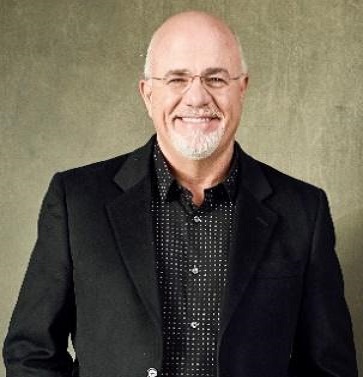
* Dave Ramsey is a national bestselling author, personal finance expert and host of “The Ramsey Show,” the second-largest talk radio show in America. He has appeared on “Good Morning America,” “CBS Mornings,” “Today,” Fox News, CNN, Fox Business and many more. Since 1992, Dave has helped people regain control of their money, build wealth and enhance their lives. He also serves as the CEO of Ramsey Solutions.

Right Heart, Wrong Actions


Dear Dave, 


I’m beginning to feel some bitterness and resentment towards my parents for their recent decisions and financial irresponsibility. Fifteen years ago, while I was still in school, they left good-paying jobs to enter the ministry. They both took pay cuts when they made this decision, and they’ve been regularly asking for money for living expenses from my husband and I ever since. Sometimes, they even try to make us feel guilty if we can’t give them the amount they ask for. My mom, especially, constantly brings up their call to the ministry, adding that we should want to help them. We believe in their calling, but we also feel they knew they would have to live on less money, and they’re being irresponsible with the money they make. What should we do?


Abigail 


Dear Abigail, 


What I’m hearing is giving money to your parents isn’t necessarily a financial hardship for you and your husband, but that by consistently giving or loaning your parents money you’re losing respect for them. This is not a healthy situation. Your relationship has become strained, and that’s a tough thing for anyone to deal with—especially in a parent-child scenario.


Make no mistake, going into the ministry with the right heart is an admirable thing. However, in the Bible, Paul made tents while he conducted his ministry. I’m paraphrasing, of course, but his line was to the effect of, “If you don’t work, you don’t eat.” He had a job. So, I don’t think suggesting your folks think about working outside the ministry while trying to do God’s work is unfair in a situation like this.


I’m sure your mom is a good person, but no one should do this to their child. On top of it all, she sounds like a travel agent for guilt trips—like she’s working you over while implying it’s all really for God. That’s not only toxic, it’s just plain wrong.


It’s going to be hard to unravel it all and turn this into a respectable situation where they’re not constantly asking for money, and you’re not feeling pressure and falling victim to the guilty feelings that enable this behavior. I hope all of you will consider sitting down with a reasonable, objective third party and talking things through. I also hope you’ll take some time to read a book called Boundaries by Dr. Henry Cloud. It will open your eyes to a few things.  


God bless you and your family, Abigail.


—Dave


  * Dave Ramsey is an eight-time national best-selling author, personal finance expert and host of The Ramsey Show, heard by more than 20 million listeners each week. He has appeared on Good Morning America, CBS Mornings, Today Show, Fox News, CNN, Fox Business, and many more. Since 1992, Dave has helped people regain control of their money, build wealth and enhance their lives. He also serves as CEO for the company, Ramsey Solutions.

You Haven


Dear Dave,


I’m 32 and debt-free, except for my house. My grandmother passed away a couple of months ago, and her will has caused problems for my family. I was her only relative living in the same town as she got older, so I looked in on her and helped take care of her, because she didn’t want to go into a care facility. In her will, she left everything—her house and property, along with about $300,000—to me. Some of my relatives said they deserve something. Two have even accused me of wanting everything she had and turning my grandmother against them. I don’t like what’s happening, but I’m not sure what to do. I never asked her for anything.


Jeffrey


Dear Jeffrey,


I hate it when things get ugly between family members, especially at a time when everyone should be pulling together and supporting each other. I’m sorry you’re going through all this.


Let me ask you a question. Did you love your grandmother? It sounds to me like you did. A lot! It takes a special person to step in and help the way you did. I think it’s pretty obvious she loved you, too.  


When a person dies, they can give their belongings to anyone they choose. It was your grandmother’s stuff, so it was her decision. Period. She could’ve spread it around among you and the rest of your family, but she didn’t do that. She had her reasons, and her final wishes were just that—her final wishes. No one in your family, even you, deserved anything from her.


I know this is a hard position for you to be in, Jeffrey. This has probably crossed your mind, so I’ll go ahead and say it. Generally speaking, it’s possible to transfer part of your inheritance to someone else even if it's not specified in the will or trust. Keep in mind, you might need to seek court approval for such a transfer, depending on the jurisdiction and specific family circumstances.


Or, you can let anyone who has a problem with your grandmother’s decision contest the will. Of course, one possible outcome of that is you might have to spend the money she left fighting them in court. The lady left what she left. There’s no more. It was her house, her property and her money. The others aren’t entitled to what she had just because they’re relatives or they want it.


If you go to church, I’d advise you spend some time talking to your pastor about the situation. You’ve got a lot of folks mad at you right now, and I think you might benefit from a few kind words and an objective point of view. I’d also recommend sitting down with a good financial planner—someone with the heart of a teacher—and talk about to best handle your newfound inheritance. Regardless of your decision, it’s always best to have a plan and be prepared.


In the meantime, don’t beat yourself up over this, son. You haven’t done anything wrong.


God bless you.


—Dave


 * Dave Ramsey is an eight-time No. 1 national best-selling author, personal finance expert and host of The Ramsey Show, heard by more than 20 million listeners each week. He has appeared on Good Morning America, CBS Mornings, Today Show, Fox News, CNN, Fox Business, and many more. Since 1992, Dave has helped people regain control of their money, build wealth and enhance their lives. He also serves as CEO for the company, Ramsey Solutions.


He Needs To Be Reminded


Dear Dave,


My husband and I both work outside the home, and he has come up with an idea for our fun money. He wants us to set up an account where we both put 5% of our earnings for discretionary spending. The issue in my mind is that he would have a lot more to spend, because he makes much more money than I do. He says he feels he should be able to spend more since he makes more. I’m not a greedy person, and I don’t spend money on a lot of frivolous things, but I do think things would be even. I feel we should each put in the same dollar amount—one that’s fair to both of us—if we’re going to do this. What do you think?

Val


Dear Val,


This isn’t a good plan. I’m sure your husband means well, and that he’s really a good guy overall, but it sounds to me like he probably hasn’t thought this whole thing through. As they stand now, the details of his idea play out as pretty immature and selfish. And something tells me you wouldn’t marry a man like that.


Think about it this way. There are plenty of families out there where only one person works outside the home and generates an actual income. Would it be fair to say that whoever brings home the paycheck is the only one who can have fun spending once in a while? Of course, not! In most cases, spouses who don’t work outside the home take on tons of responsibility and accomplish several things every single day—especially if the couple has kids. If you put a monetary amount on all that, it’d wind up being a pretty nice income dollars-wise.


Remember back when you two got married? If it were anything close to a traditional ceremony, I’ll bet the preacher pronounced you two “as one.” As in every thing and every way. That means you have one income, a combined income, and it’s our income. If you own a home, it’s our home. It’s not more his home just because he makes more money than you. Our kids, our marriage our everything. Get the picture?


Marriage is not a me proposition. It should always be a we thing. Your husband needs to be reminded of that.


—Dave


  * Dave Ramsey is an eight-time No. 1 national best-selling author, personal finance expert and host of The Ramsey Show, heard by more than 20 million listeners each week. He has appeared on Good Morning America, CBS Mornings, Today Show, Fox News, CNN, Fox Business, and many more. Since 1992, Dave has helped people regain control of their money, build wealth and enhance their lives. He also serves as CEO for the company, Ramsey Solutions.

That


Dave, 


My husband and I own a small business. We’ve been open for 12 years, and fortunately we’ve been very successful. We made the decision when we first opened to run the business debt-free. Along with that, we only accept cash, checks and debit cards for payment. Recently, we’ve had a client become very insistent that we start accepting credit cards. Our relationship with this client is becoming a little contentious over the issue. How should we address the situation?


Debra 


Debra,


Like we, as entrepreneurs, don’t have enough things to worry about every, single day, right?


As you might imagine, I have a bunch of people who are mad at me all the time because I don’t accept credit cards. But in my case, it’s not just a business decision. I teach people all the time not to use credit cards, and why they shouldn’t. So, I can’t very well go around encouraging folks to just swipe their credit cards when they buy from my company. 


For starters, that client is way out of bounds. It’s not their place to tell you how to run your business. But you’re lucky to only have one person getting pushy about the whole credit card deal. Everything about the credit industry today is out of control. But even though your case is a little different than mine, you have every right to not accept credit cards—especially if you have a moral or values-related issue with the product.  


As time goes by, you’ll probably have a few other people turn up their noses at the idea of not being able to pay with a credit card, but if you consistently offer great services or products at great prices, those experiences will only be a bump in the road. You don’t want to be argumentative when things like this happen, so maybe you can just smile, and let them know you always appreciate input from your clients.


I’m sure you and your husband work hard to make your business the best it can be. The fact that you’re still around over a decade after opening up shop is proof of that. You’ve probably realized, too, that being in business for yourself isn’t all sunshine and rainbows every day. Regardless, no one has the right to get in your face over how your business is structured or try to push you into doing things differently. Listening to, and evaluating, suggestions from clients only makes sense. It’s a smart thing for any business owner to do. But this one client is saying you should change a long-standing operating principle based on a whim—their whim.


And that’s not okay.


—Dave


 * Leadership and small-business expert Dave Ramsey is CEO of Ramsey Solutions. He has authored eight national bestselling books, including EntreLeadership, and is a host of The Ramsey Show and The EntreLeadership Podcast.

On Air Now

Guy Benson
Guy Benson
9:00pm - 12:00am
The Guy Benson Show

Weather

Submit Items For Tradio!